

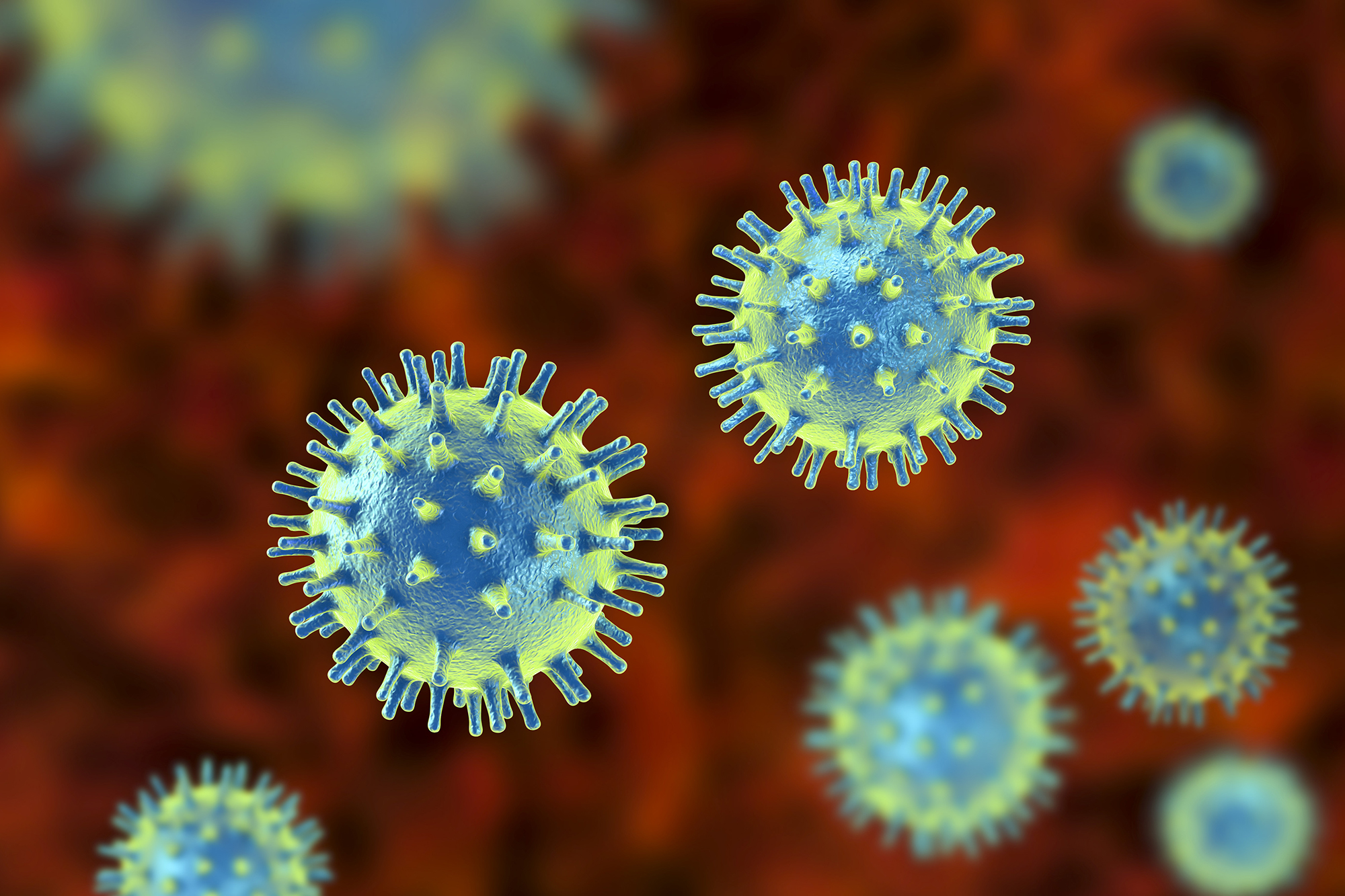
Viruses are microscopic infectious agents that occupy a unique position between living and non-living things. They infect all forms of life, including humans, animals, plants, fungi, and bacteria. Scientists have debated for many years whether viruses should be considered true living organisms because they possess some characteristics of life but lack many others.
One of the main reasons viruses are not considered true living organisms is that they are acellular. Unlike plants, animals, fungi, bacteria, and protozoa, viruses are not made of cells. They have no cell membrane, cytoplasm, nucleus, ribosomes, mitochondria, or other organelles found in living cells. Since the cell is regarded as the basic structural and functional unit of life, the absence of cellular organization is a major reason why viruses are generally excluded from the living world.
Viruses have a very simple structure. Each virus consists of genetic material, either DNA (Deoxyribonucleic Acid) or RNA (Ribonucleic Acid), enclosed within a protective protein coat called a capsid. Some viruses also possess a lipid envelope derived from the host cell membrane. This simple structure allows viruses to protect and transport their genetic material but does not enable them to function independently.
Unlike living organisms, viruses do not carry out metabolism. They cannot produce energy, synthesize proteins, digest nutrients, or perform respiration. Living organisms obtain energy through metabolic reactions that occur continuously within their cells. Viruses completely lack these metabolic systems.
Viruses also cannot grow. Living organisms increase in size by producing new cells or enlarging existing cells. Viruses do not increase in size after they are formed. Instead, they are assembled from newly synthesized viral components inside a host cell.
Another important characteristic of living organisms is the ability to reproduce independently. Bacteria divide by binary fission, while plants and animals reproduce through specialized reproductive processes. Viruses cannot reproduce on their own. They must infect a living host cell and hijack its molecular machinery to produce new virus particles. For this reason, viruses are described as obligate intracellular parasites.
Although viruses are not considered fully living organisms, they possess certain characteristics associated with life. They contain genetic material, which carries hereditary information and determines the characteristics of each virus. Their genetic material can mutate, allowing viruses to evolve over time.
Viruses also undergo evolution through mutation and natural selection. New viral variants emerge because of genetic changes that may increase their ability to infect hosts, escape immune responses, or resist antiviral drugs. This evolutionary capacity is one of the strongest arguments used by scientists who consider viruses to be living entities.
Viruses exhibit remarkable specificity toward their hosts. Some viruses infect only humans, while others infect animals, plants, fungi, or bacteria. This specificity depends on the ability of viral surface proteins to recognize receptors found on particular host cells.
The viral life cycle begins when a virus attaches to a susceptible host cell. It then enters the cell and releases its genetic material. The host cell's ribosomes, enzymes, and energy are used to replicate viral nucleic acids and synthesize viral proteins. Newly formed virus particles are assembled and eventually released to infect additional cells.
Because viruses depend entirely on host cells for replication, they are often described as existing at the border between living and non-living matter. Outside a host cell, viruses remain inactive and behave much like complex chemical particles. Inside a host cell, however, they become biologically active and direct the production of new viruses.
Viruses play important roles in ecosystems and scientific research. They regulate microbial populations, influence nutrient cycling, contribute to evolution through gene transfer, and serve as valuable tools in molecular biology, biotechnology, vaccine development, gene therapy, and cancer research.
Many viruses cause diseases in humans, including influenza, COVID-19, AIDS, hepatitis, rabies, measles, Ebola, and polio. Others infect animals and plants, causing diseases that affect agriculture and livestock production.
Scientists continue to study viruses because understanding their biology is essential for developing vaccines, antiviral drugs, diagnostic tests, and new medical technologies.
Why Viruses Are Not Considered True Living Organisms
- They are not made of cells (acellular).
- They have no cytoplasm or organelles.
- They cannot perform metabolism.
- They cannot produce their own energy.
- They cannot grow or divide.
- They cannot reproduce independently.
- They are inactive outside a host cell.
- They depend completely on living cells for replication.
Characteristics That Make Viruses Similar to Living Organisms
- They contain DNA or RNA.
- They possess genetic information.
- They can mutate.
- They can evolve through natural selection.
- They can reproduce inside living host cells.
- They adapt to environmental pressures.
Conclusion
Viruses are unique biological entities that possess some characteristics of living organisms but lack many of the essential features required for independent life. They are acellular, have no metabolism, cannot grow, and cannot reproduce without a host cell. For these reasons, most scientists do not classify viruses as true living organisms. Instead, they are considered obligate intracellular parasites that exist at the boundary between living and non-living matter.
Leave a comment
Your email address will not be published. Required fields are marked *