

Top 10 Most Dangerous Computer Viruses in History
The digital world has transformed how people communicate, work, and manage their lives. However, alongside technological progress came a darker reality: malicious software. Some computer viruses and malware campaigns have infected millions of computers, crippled governments, disrupted hospitals, and caused billions of dollars in economic damage.
Over the past few decades, cybercriminals and state-sponsored hackers have developed increasingly sophisticated malware capable of stealing data, encrypting systems, disrupting critical infrastructure, and even causing physical destruction. While thousands of malware strains emerge every year, only a handful have earned a place among the most destructive cyber threats ever recorded.
Here are the ten most dangerous computer viruses and malware attacks in history and why they remain important lessons for modern cybersecurity.
1. ILOVEYOU (2000)
Few computer viruses have spread as rapidly as ILOVEYOU, also known as the "Love Bug."
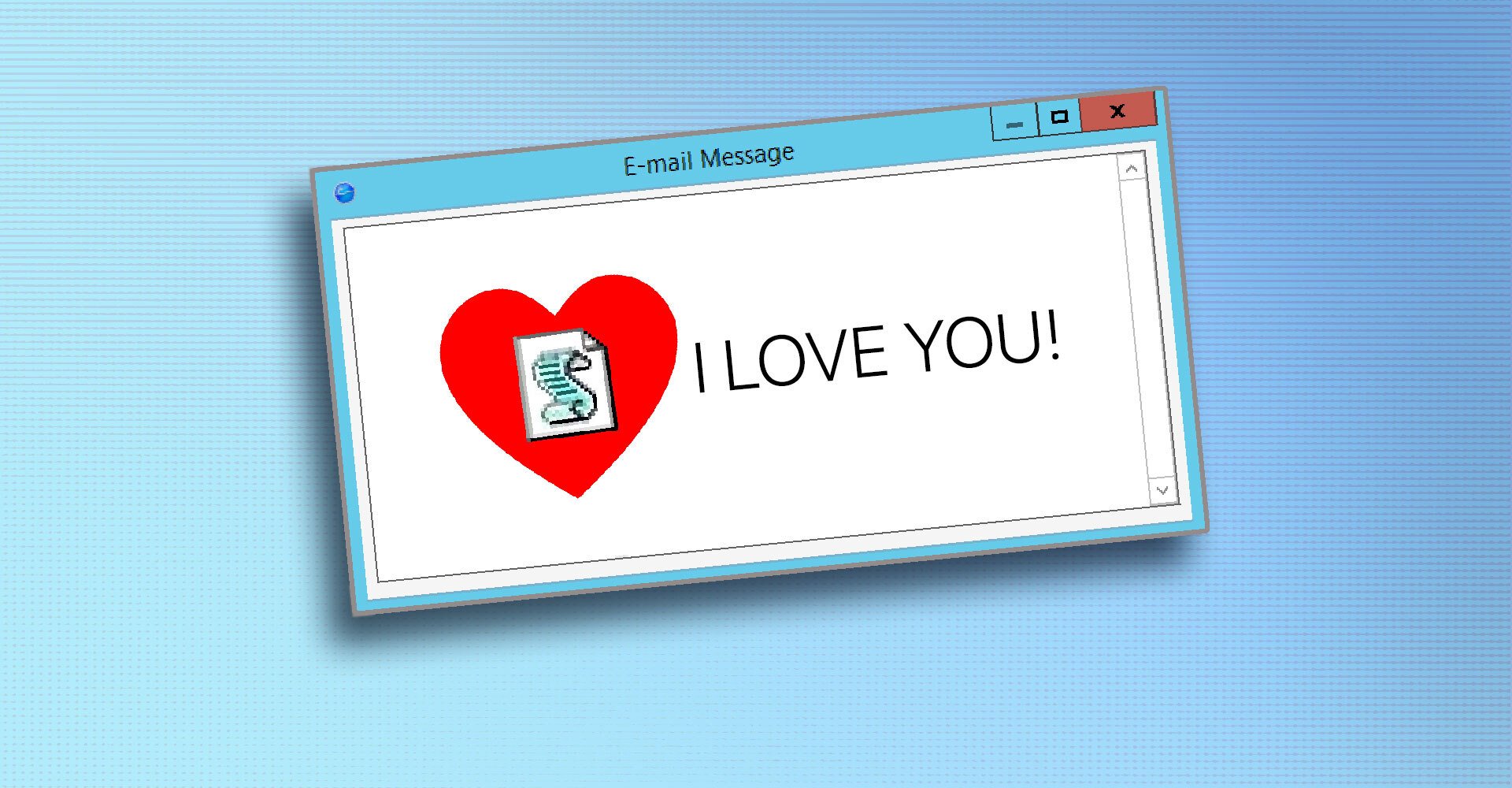
The malware arrived through email with the subject line "ILOVEYOU" and an attachment disguised as a love letter. Curiosity led millions of users to open it. Once executed, the worm copied itself, sent itself to contacts in Microsoft Outlook, and overwrote files across infected systems.
Within days, the worm infected millions of computers worldwide. Governments, corporations, military organizations, and banks were forced to disconnect email systems to stop its spread. Estimated damages ranged from several billion dollars to more than $10 billion globally.
The success of ILOVEYOU demonstrated that human psychology can be as dangerous as software vulnerabilities. Social engineering became one of the most effective weapons in cybercrime.
2. Mydoom (2004)
Mydoom is often regarded as the most financially damaging email worm ever created.
Discovered in January 2004, the malware spread through infected email attachments. Once activated, it harvested email addresses and sent copies of itself to new victims while opening backdoors for remote attackers. It also launched denial-of-service attacks against targeted websites.
At its peak, Mydoom accounted for roughly one quarter of all email traffic on the internet. The economic damage was estimated at tens of billions of dollars, making it one of the costliest cyber incidents in history.
Remarkably, variants of Mydoom continued circulating many years after its initial outbreak.
3. WannaCry (2017)
WannaCry changed how the world viewed ransomware.
The malware exploited a Windows vulnerability and spread automatically across networks. Once inside a system, it encrypted files and demanded payment in Bitcoin in exchange for decryption keys.
The attack affected more than 200,000 systems across over 150 countries. Hospitals, transportation systems, government agencies, and major corporations suffered operational disruptions. The United Kingdom's National Health Service experienced significant service interruptions, forcing appointment cancellations and emergency response changes.
WannaCry demonstrated how dangerous unpatched software could become in an interconnected world.
4. Stuxnet (2010)
Unlike traditional malware designed for financial gain, Stuxnet was built as a cyber weapon.
The sophisticated worm targeted industrial control systems and specifically attacked equipment used in Iran's nuclear program. By manipulating industrial machinery while hiding its actions from operators, Stuxnet reportedly damaged centrifuges used for uranium enrichment.
Cybersecurity experts consider Stuxnet a historic milestone because it was among the first known malware campaigns to cause physical destruction through digital means.
Its discovery revealed that cyber warfare had evolved beyond data theft into the realm of critical infrastructure sabotage.
5. NotPetya (2017)
At first glance, NotPetya appeared to be ransomware. In reality, it was a destructive malware attack disguised as one.
The malware spread rapidly through corporate networks and permanently destroyed data rather than providing meaningful recovery options. Originally targeting organizations in Ukraine, it quickly spread worldwide and affected multinational companies.
Global damages were estimated at more than $10 billion, making NotPetya one of the most expensive cyberattacks ever recorded. Shipping companies, pharmaceutical firms, airports, and logistics providers experienced severe disruptions.
Many cybersecurity analysts consider NotPetya one of the most devastating malware incidents in modern history.
6. Conficker (2008)
Conficker became infamous for its sophisticated propagation methods.
The worm exploited vulnerabilities in Microsoft Windows and spread through networks, removable media, and weak passwords. Once installed, it disabled security services, blocked updates, and created a massive botnet under attacker control.
Millions of computers became infected worldwide. Although experts feared catastrophic attacks, the greatest damage came from cleanup costs and large-scale defensive efforts required to contain the threat.
Conficker remains a textbook example of how rapidly malware can spread when systems are left unpatched.
7. Zeus (2007)
Zeus revolutionized financial cybercrime.
This banking Trojan infected computers through phishing campaigns and malicious downloads. Once installed, it captured login credentials, banking information, and sensitive personal data.
Zeus was responsible for countless financial theft operations worldwide. At one point, it reportedly affected organizations across a large portion of major corporations and institutions. The malware's source code later leaked online, enabling cybercriminals to create numerous variants.
Many modern banking Trojans trace their origins back to Zeus.
8. Melissa (1999)
Melissa was one of the earliest internet-age malware outbreaks.
The virus arrived through email attachments disguised as documents. When opened, it automatically mailed itself to dozens of contacts from the victim's address book, causing email servers around the world to become overwhelmed.
Although less destructive than later malware campaigns, Melissa demonstrated how quickly malicious code could spread through interconnected communication systems.
The outbreak forced many organizations to temporarily shut down email services to regain control.
9. Code Red (2001)
Code Red exploited vulnerabilities in Microsoft web servers and rapidly infected hundreds of thousands of systems.
The worm launched denial-of-service attacks against targeted servers and defaced websites with political messages. Within hours of appearing, it had spread across the globe.
Code Red highlighted the risks associated with internet-facing servers and accelerated industry awareness regarding timely security patch management.
10. CryptoLocker (2013)
Before ransomware became a global epidemic, CryptoLocker demonstrated just how profitable digital extortion could be.
The malware encrypted victims' files and demanded payment to restore access. Many victims had no viable backup strategy and were forced to choose between paying criminals or losing their data permanently.
CryptoLocker inspired a new generation of ransomware operations that would later evolve into massive criminal enterprises targeting businesses, schools, hospitals, and government agencies worldwide.
Why These Viruses Changed Cybersecurity Forever
The impact of these malware campaigns extends far beyond financial losses.
They transformed how organizations approach cybersecurity by encouraging:
- Regular software updates
- Multi-factor authentication
- Employee security awareness training
- Advanced endpoint protection
- Network segmentation
- Offline and cloud backups
- Continuous threat monitoring
Each major outbreak exposed weaknesses in technology, human behavior, or organizational security practices. Cybersecurity defenses used today are largely the result of lessons learned from these historic attacks.
From the social-engineering success of ILOVEYOU to the industrial sabotage capabilities of Stuxnet and the worldwide disruption caused by WannaCry and NotPetya, these malware campaigns reshaped the digital landscape. Their stories serve as powerful reminders that cybersecurity is no longer optional—it is an essential part of modern life.
As cyber threats continue evolving in 2026 and beyond, understanding the history of these devastating viruses helps individuals and organizations prepare for the next generation of attacks and defend the technologies that power our world.
Bir yorum bırakın
E-posta adresiniz yayınlanmayacaktır. Gerekli alanlar * ile işaretlenmiştir