

Definition of Gravitation
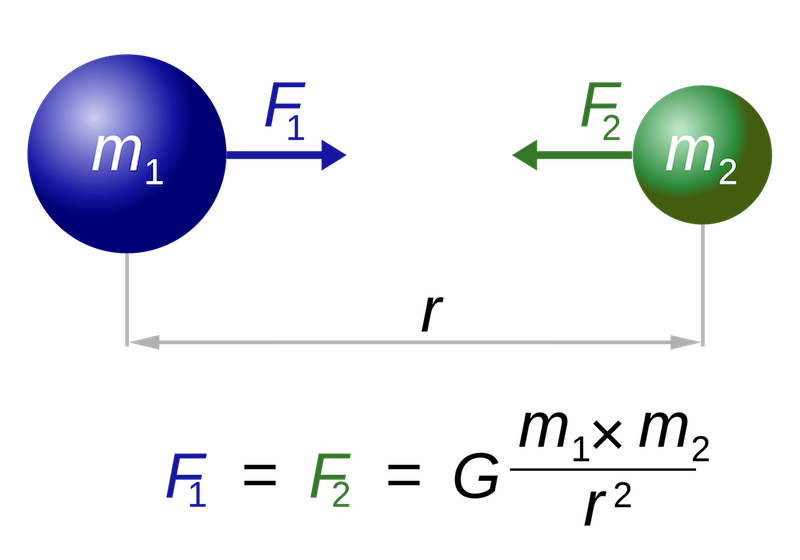
Gravitation is the attractive force that exists between any two objects that have mass. The greater the mass of the objects and the closer they are, the stronger the force of attraction between them.
Newton’s Law of Universal Gravitation
The law of universal gravitation was formulated by Isaac Newton. It states that every object in the universe attracts every other object with a force that depends on their masses and the distance between them.
Gravitational Constant
The gravitational constant G is a universal value that determines the strength of gravitational attraction. It is very small, which explains why gravity is weak between small objects.
Factors Affecting Gravitation
The gravitational force depends on:

Meet Termux.

CRISPR: The Revolutionary Gene-Editing Technology Transforming Biology
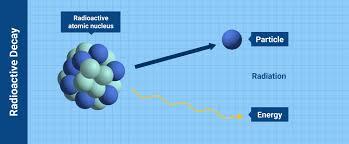
Radioactivity: The Invisible Energy from Atomic Nuclei
Thermodynamics
Science in the 21st Century: Progress at Unprecedented Speed
Nvidia Launches New Windows Processor to Compete with Intel in the AI Era
- The mass of the objects (greater mass = stronger force)
- The distance between them (greater distance = weaker force)
Gravitation on Earth
On Earth, gravity is what pulls objects toward the ground. It gives weight to objects and keeps the atmosphere attached to the planet.
Gravitation in Space
In space, gravity is responsible for the motion of planets around the Sun, moons around planets, and galaxies holding together.
Importance of Gravitation
Gravitation is essential for life and the structure of the universe. Without it, planets would not orbit, and matter would not form large structures like stars and galaxies.
Conclusion
Universal gravitation is one of the most important forces in physics. It explains natural motion on Earth and in space, making it fundamental to understanding the universe.
Bir yorum bırakın
E-posta adresiniz yayınlanmayacaktır. Gerekli alanlar * ile işaretlenmiştir