

Could Iran Really Disrupt the Global Internet?
In today’s digital age, most people imagine the Internet as an invisible cloud floating in space, powered by satellites and wireless technologies. In reality, the modern Internet depends heavily on a massive physical infrastructure hidden beneath the oceans.
Thousands of kilometers of undersea fiber optic cables carry nearly all international digital communications:
- banking transactions,
- cloud computing,
- video streaming,
- military communications,
- stock market operations,
- messaging applications,
- and government data.
These submarine cables form the backbone of the global Internet.
One of the most strategically sensitive regions for this infrastructure is the Strait of Hormuz, an extremely important maritime passage connecting the Persian Gulf to the Arabian Sea.
In recent years, geopolitical tensions involving Iran have raised concerns among analysts, cybersecurity experts, and governments about a critical question:
Could Iran intentionally or accidentally disrupt global Internet traffic by interfering with submarine fiber optic cables?
The answer is complex.
The Internet Runs Under the Ocean
Contrary to popular belief, satellites carry only a very small percentage of global Internet traffic.
Approximately 95% to 99% of international data moves through submarine fiber optic cables installed on the ocean floor. These cables connect continents and enable the modern digital economy to function in real time.
Without them:
- cloud platforms would slow down,
- international banking could experience disruptions,
- video calls would become unstable,
- and global communications would suffer severe latency issues.
These cables are some of the most important yet least visible pieces of infrastructure on Earth.
Why the Strait of Hormuz Matters
The Strait of Hormuz is already famous for its importance in global oil transportation. A large percentage of the world’s petroleum exports pass through this narrow waterway every day.
However, many people are unaware that the region is also strategically important for digital communications.
Multiple submarine cable systems connecting:
- Europe,
- the Middle East,
- Asia,
- and South Asia
either pass through or near the Gulf region and surrounding maritime routes.
This creates a digital chokepoint.
Any major instability in the region can potentially affect:
- telecommunications,
- cloud providers,
- financial systems,
- and global Internet routing.
Could Iran Intentionally Cut Internet Cables?
Technically, yes.
Like many coastal nations with maritime capabilities, Iran could theoretically interfere with submarine cable infrastructure in several ways:
- naval operations,
- underwater sabotage,
- blocking repair ships,
- or creating military conditions that make maintenance impossible.
However, intentionally attacking international submarine cable systems would carry extremely serious consequences.
Undersea cables are considered critical international infrastructure. A deliberate attack could trigger:
- diplomatic crises,
- economic retaliation,
- sanctions,
- or even military escalation.
This is one reason why experts believe a large-scale intentional cable attack remains unlikely unless regional conflict becomes extreme.
Accidental Cable Damage Happens More Often Than People Think
One important fact often ignored in public discussions is that submarine cables are damaged regularly around the world even without war.
Common causes include:
- ship anchors,
- industrial fishing equipment,
- underwater earthquakes,
- landslides,
- and maritime accidents.
Repairing a damaged cable is a highly specialized process involving:
- cable repair ships,
- underwater robotics,
- precise location analysis,
- and favorable weather conditions.
If geopolitical tensions make repairs difficult, even a small accident could have amplified consequences.
What Would Happen if Major Cables Were Cut?
If multiple submarine cables near the Gulf region were disrupted simultaneously, the global Internet would not completely collapse.
However, the effects could still be severe.
Possible consequences include:
Slower Internet Speeds
Traffic would need to reroute through alternative international paths, increasing congestion and latency.
Users could experience:
- slower browsing,
- unstable video streaming,
- delayed cloud access,
- and degraded communication quality.
Cloud Service Disruptions
Major cloud providers depend heavily on international fiber networks.
Services potentially affected include:
- cloud storage,
- AI infrastructure,
- enterprise hosting,
- and remote work platforms.
Large providers such as:
- Google Cloud,
- Amazon Web Services,
- and Microsoft Azure
all rely on extensive global network connectivity.

Nvidia Launches New Windows Processor to Compete with Intel in the AI Era

Will AI Make Humans Completely Unemployed? The Truth About the Future of Work
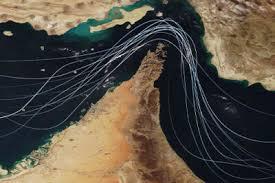
Could Iran Disrupt the Global Internet? The Strategic Importance of Undersea Fiber Optic Cables
Éco-anxiété numérique face à la singularité : comment préserver sa santé mentale à l’ère des algorithmes ?
L’Intelligence Artificielle : Entre Progrès et Risques
Artificial Intelligence Is Entering a New Era as Global AI Competition Intensifies in 2026
Financial System Instability
Modern banking systems operate in real time across continents.
Submarine cable disruptions could impact:
- stock trading,
- payment processing,
- international transfers,
- and banking synchronization.
Financial latency measured in milliseconds can already influence global markets significantly.
Regional Internet Outages
Some countries are more dependent on limited cable routes than others.
Regions potentially vulnerable include:
- parts of the Middle East,
- South Asia,
- and certain African regions.
Countries with fewer redundant connections may experience partial outages or severe slowdowns.
Why the Internet Would Probably Survive
The global Internet was designed with redundancy.
This means there are usually multiple pathways for data to travel between continents.
If one route fails:
- traffic can reroute,
- alternate cables can absorb part of the load,
- and satellite systems can assist in limited scenarios.
However, redundancy does not eliminate performance degradation.
The more cables affected simultaneously, the greater the impact on:
- latency,
- bandwidth,
- and reliability.
Cybersecurity Experts Are Increasingly Concerned About Infrastructure Warfare
Modern geopolitical conflicts are no longer limited to traditional military operations.
Today, strategic infrastructure includes:
- power grids,
- satellites,
- data centers,
- semiconductor supply chains,
- and submarine cables.
Undersea infrastructure has become a major focus in cybersecurity and intelligence analysis because modern economies depend almost entirely on digital connectivity.
This has transformed submarine cable security into a national security issue.
The Growing Race for Alternative Internet Routes
Because of increasing geopolitical tensions worldwide, governments and technology companies are investing heavily in alternative communication routes.
These include:
- Arctic cable projects,
- new Europe-Asia cable systems,
- terrestrial fiber corridors,
- and expanded satellite communications.
The goal is simple:
reduce dependence on single strategic chokepoints.
This diversification strategy improves resilience against:
- accidents,
- natural disasters,
- cyber conflict,
- and geopolitical instability.
The Future of Global Internet Security
The discussion surrounding Iran and submarine cables highlights a broader reality:
The Internet is physical infrastructure.
Despite the illusion of a “wireless world,” modern civilization still depends on vulnerable systems located:
- under oceans,
- inside data centers,
- across power grids,
- and along international maritime routes.
As geopolitical competition intensifies, these infrastructures may become increasingly important strategic targets.
Governments, telecom companies, and cybersecurity experts now recognize that protecting submarine cables is no longer only a telecommunications issue.
It is a matter of:
- economic stability,
- national defense,
- and global digital security.
Final Thoughts
Could Iran disrupt submarine Internet cables?
Technically, yes.
Could it completely destroy the global Internet?
Probably not.
The Internet was built with redundancy and multiple routing systems designed to survive failures. However, major disruptions in strategic maritime regions like the Strait of Hormuz could still create:
- serious connectivity problems,
- financial disruptions,
- cloud instability,
- and regional communication crises.
The real lesson is larger than one country or one conflict.
Modern civilization depends on invisible infrastructure that most people never think about until it becomes vulnerable.
And beneath the oceans, thousands of kilometers of fiber optic cables quietly carry the digital heartbeat of the world.
Meet Termux.

CRISPR: The Revolutionary Gene-Editing Technology Transforming Biology
Leave a comment
Your email address will not be published. Required fields are marked *